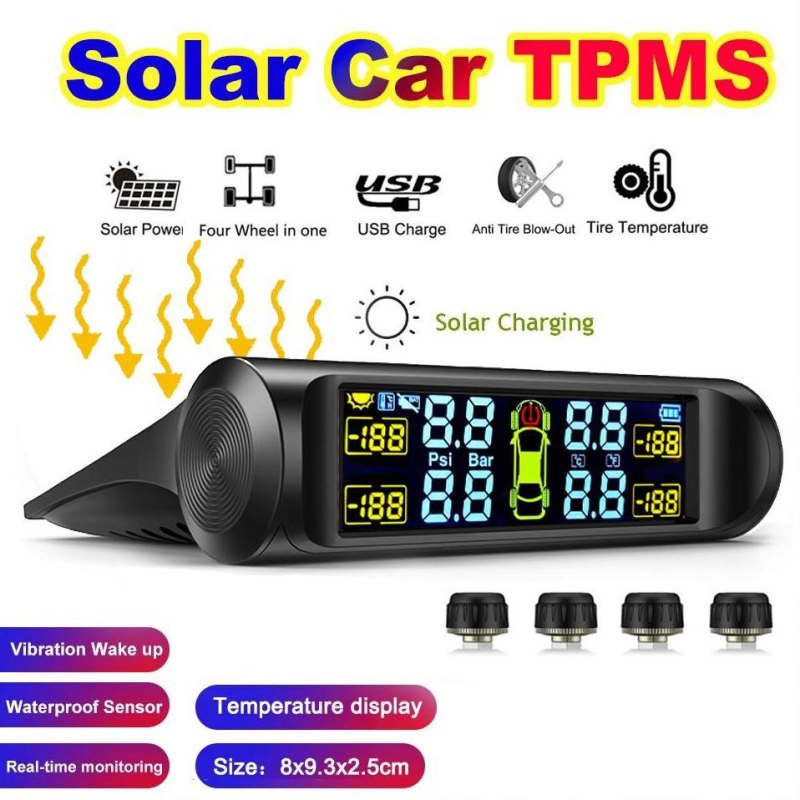
Short answer: TPMS stands for Tyre Pressure Monitoring System. Small sensors on your tyres measure the air pressure and show it on a screen inside the car. If a tyre starts losing air, the screen warns you, so you can stop before it turns into a flat or a dangerous blow-out.
Most cars in Pakistan, from a Mehran or Alto to a Corolla or Sportage, do not come with a pressure screen. Drivers usually find a soft tyre only when the car starts pulling to one side or a petrol pump attendant points it out. A TPMS takes the guesswork out.
Why tyre pressure matters so much
- Safety. Under-inflated tyres heat up on long motorway drives, especially in summer, and are more likely to burst.
- Fuel. A soft tyre creates more drag, so the engine works harder and you use more petrol.
- Tyre life. Wrong pressure wears the edges or the centre of the tyre faster, so you replace tyres sooner.
- Handling. Correct pressure keeps braking and steering predictable, which matters on busy city roads and in rain.
How does a TPMS work?
Our Solar Tyre Pressure Monitoring System has four external sensors, one for each tyre. Each sensor screws onto the tyre valve, in place of the normal valve cap. The sensors send the pressure readings to a small LCD display that you keep on the dashboard. The display charges itself with solar power, and you can choose between five alarm modes for low pressure, high pressure and more.
How to fit it yourself (about 10 minutes)
- Check and correct the pressure first at a petrol pump or with a gauge, so all four tyres start at the right level.
- Remove the old valve caps and keep them safe.
- Screw one sensor onto each valve by hand until it is snug. Follow the labels (front-left, front-right and so on) if your set has them.
- Place the display on the dashboard where sunlight can reach it.
- Choose your alarm mode, then take a short drive. The readings appear on the screen.
What pressure should my tyres have?
The right number is printed on a sticker inside the driver’s door frame, inside the fuel flap, or in the owner’s manual. Many small and family cars sit roughly in the 30–35 PSI range, but always use your own car’s figure, and add a little extra if the manufacturer recommends it for a fully loaded car on a long trip. Check pressure when the tyres are cold, before you drive.
A simpler option: pressure indicator caps
If you want something even easier, tyre pressure indicator caps replace your valve caps and change colour when the pressure drops. There is no screen and no battery; you simply glance at the caps before you drive. They are a good budget choice for city driving, while a TPMS with a display is better for long highway journeys and family trips.
TPMS or indicator caps: quick comparison
- TPMS with display: live readings for all four tyres inside the car, alarms while driving, solar charging.
- Indicator caps: colour check before driving, no electronics, lowest price.
Good tyre habits
- Check pressure at least once every two weeks, and before every long trip.
- Do not forget the spare tyre.
- Look for cuts, bulges or nails when you check the pressure.
- If one tyre keeps losing air, get it checked for a puncture.
Frequently asked questions
Does TPMS work on any car?
External-sensor systems like ours fit standard car tyre valves, so they work on most cars and SUVs. Message us on WhatsApp if you are unsure about your vehicle.
Do I need a mechanic to install a TPMS?
No. The sensors screw onto the valves by hand and the display sits on the dashboard. It takes about 10 minutes.
How is the display powered?
The display in our system is solar powered, so you do not need to plug it in for daily use.
Can thieves steal the sensors?
External sensors sit on the valve like a cap. Park in safe places and check them during routine pressure checks.
What PSI is correct for my car?
Use the figure on the sticker inside the driver's door or in your owner's manual. Many cars are in the 30–35 PSI range.